See what you've inherited, not the version you're handed
Every new leader inherits an organisation already in motion - shaped by decisions made before them, and described, at first, by whoever happens to be in the room. Learning how the place really works can take months. States of Vitality gives you that read at the start: an evidence-based picture of what you've taken on, from everyone in it, not just the view from the top.
What's hardest to see
A new leader's picture of the organisation is built from a handful of sources - the people who brief them, the documents they're handed, the voices that happen to carry to the top. Each is partial, and shaped by where it comes from.
And a new leader has little to test it against: with no baseline of their own, it is hard to tell an accurate account from an optimistic one. The fuller picture - how the organisation works for the people furthest from the room - is the part that takes longest to reach a new desk, and often matters most.
rate their culture as good or excellent.
A new leader almost always arrives at the top of that gap.
What States of Vitality shows you
We run one short, anonymous assessment across the whole organisation and turn it into a single, evidence-based read - the picture a new leader would otherwise spend months assembling. Eight connected dimensions of organisational health, each scored and ranked, so you can see what you've inherited at a glance: where the organisation is strong, where it's strained, and where people agree or sharply differ.
Because it is a whole-workforce read, the perception gap is right there - how far the view you are given at the top sits from the experience on the front line. And because it is broken down by group, you can see which parts of the organisation your first conversations should start with.
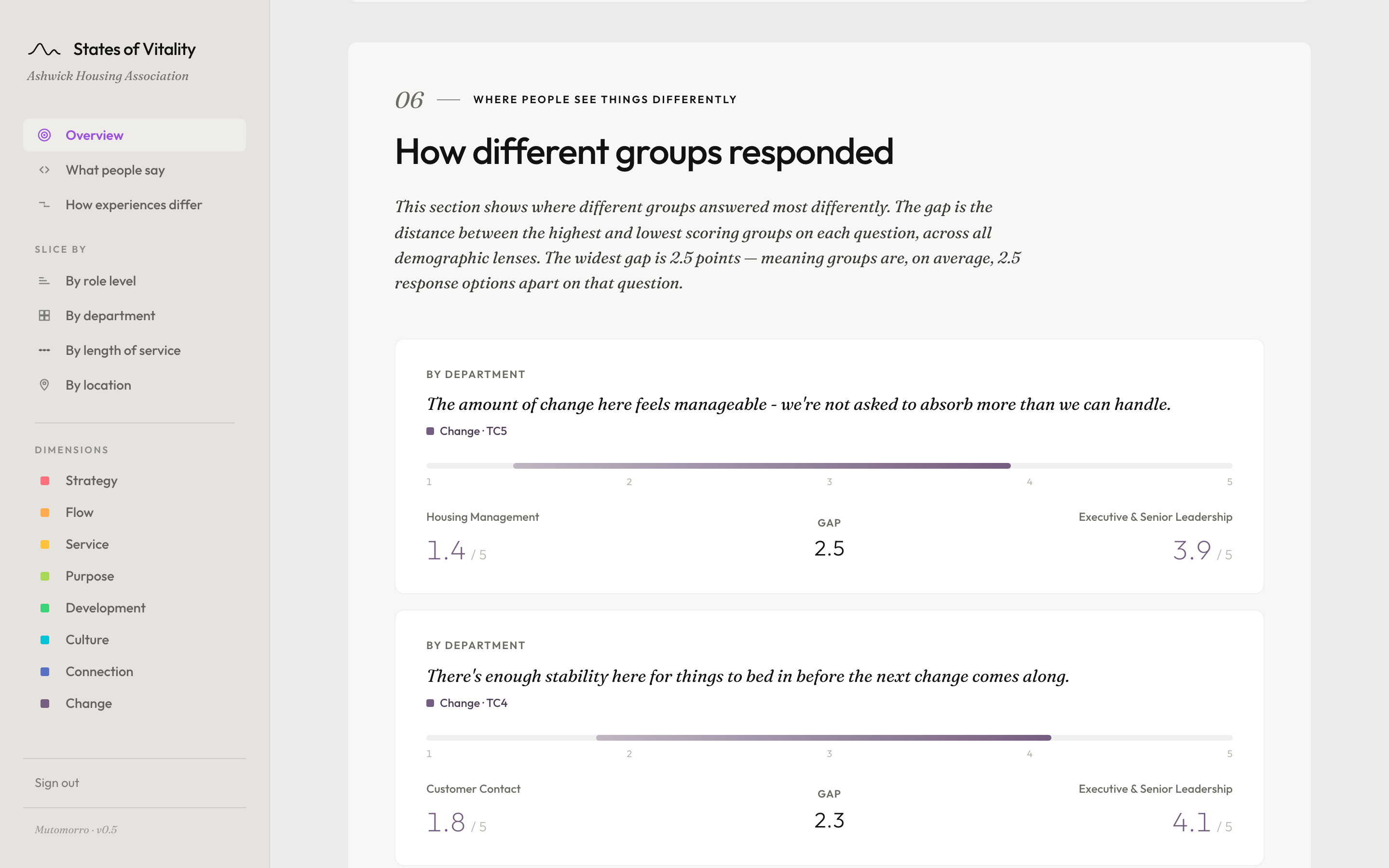
What you'd see in the dashboard
Every dimension scored and ranked, so you can see what you've inherited at a glance.
The view from the top set against the view from the front line - what you're being told, beside what people live.
Compare any two groups - department, level, tenure, location - side by side, so you know where to focus first.
What people wrote themselves, read directly - the organisation in its own voice, not filtered up to you.
Stepping into a new role, or bringing someone into one?
We can talk through what an evidence-based read of the organisation would look like - scope, timing and price.