See how two organisations really work, before they become one
Due diligence reads the numbers in detail. It rarely reads how each organisation works - the cultures, the ways of deciding, the conditions that decide whether the deal delivers. States of Vitality gives you that read, for both organisations, before the first move.
What's hardest to see
Most integration risk doesn't sit in the accounts. It sits in how people work, decide and communicate, and in the quiet differences between two organisations that look compatible on paper. Those differences tend to stay hidden right up until they start costing time, people and momentum.
A data room can't show you culture. By the time the gaps surface in the merged organisation, they are slow and expensive to close.
of leaders cite cultural clashes as the biggest challenge in making an integration work.
The risk that decides the deal is rarely in the accounts - it is in how two cultures meet, and a data room can't show you that.
What States of Vitality shows you
We run the same short, anonymous assessment across both workforces and turn it into one picture you can hold side by side. Eight connected dimensions of organisational health - from strategy and flow to culture, connection and change - measured the same way in each place.
You see where the two organisations are aligned, where they diverge, and where each is strong or strained. And because it is a whole-workforce read, you also see the difference between the view from the top and the view from the front line - the perception gaps that assumptions miss.
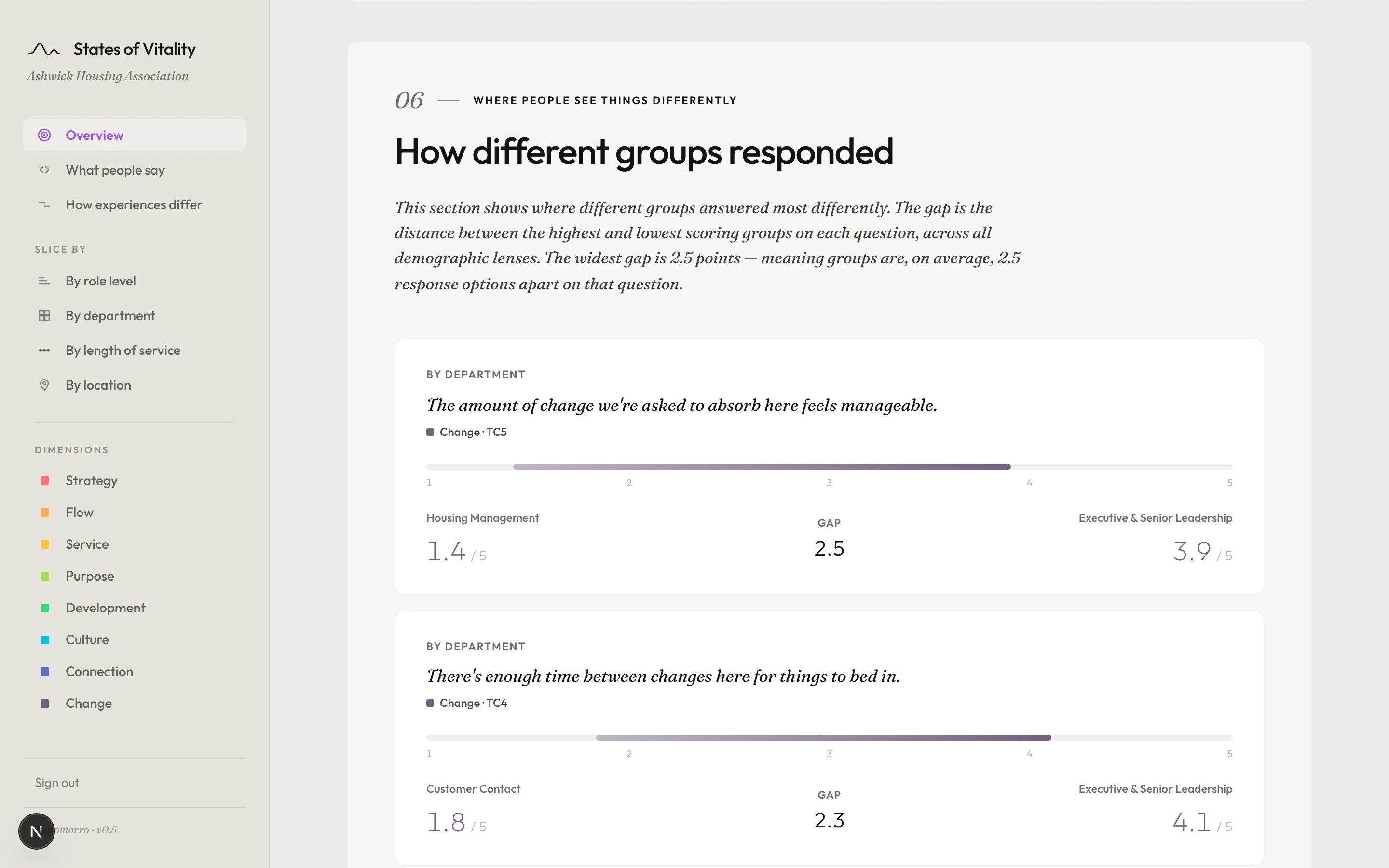
What you'd see in the dashboard
The two organisations side by side, dimension by dimension, with the biggest differences named.
Where culture, connection and change diverge most - the areas integration tends to stress first.
How each group answers the same questions, so you can tell a real gap from a rounding difference.
What people wrote in their own words, read directly rather than summarised away.
Considering a merger or acquisition?
We can talk through what a read across both organisations would look like - scope, timing and price.